
Our Company's Intelligent Manufacturing Upgrade Project Goes into Smooth Production
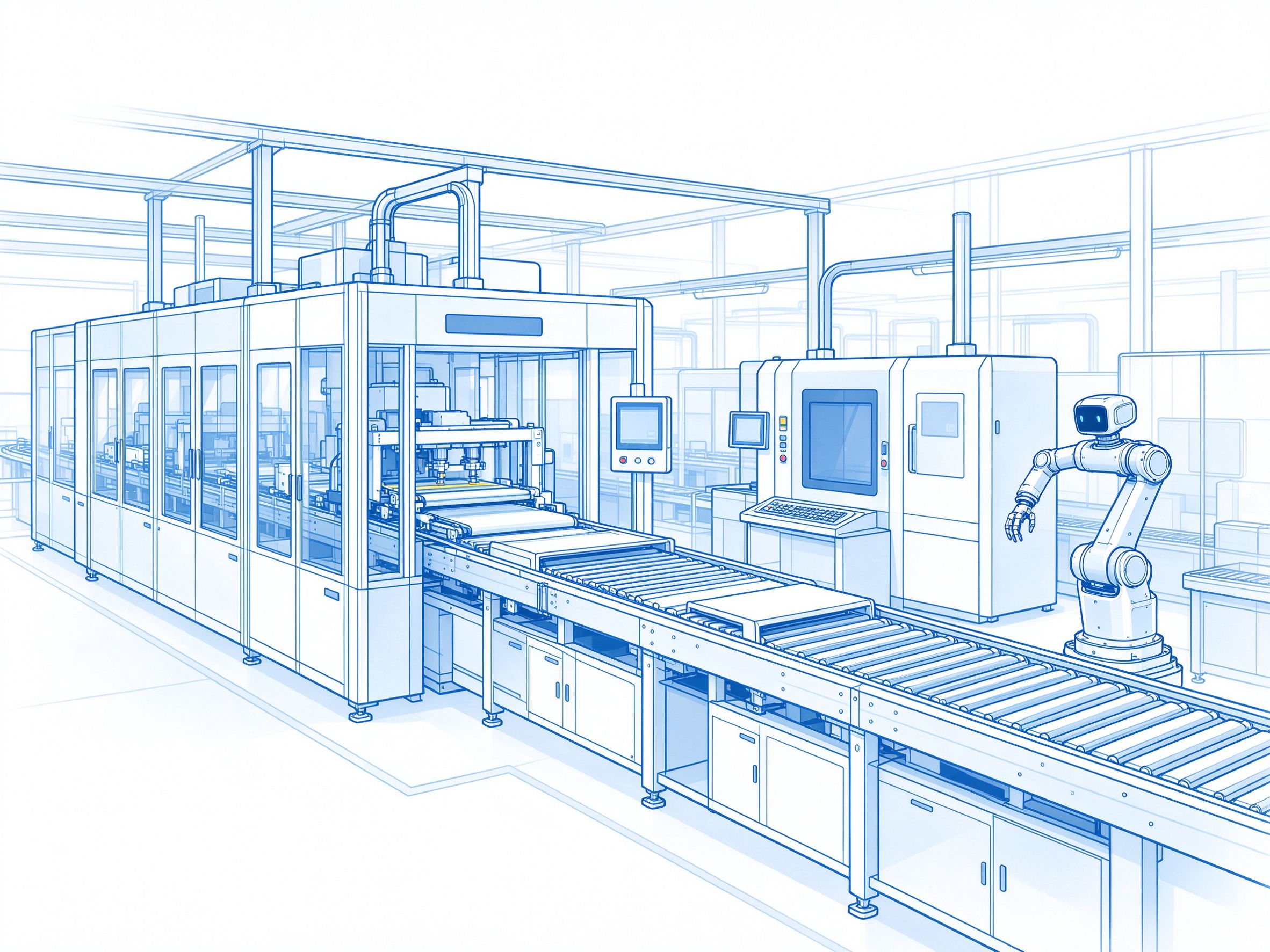
Project Review: Intelligent Manufacturing Upgrade Project Goes into Production
Recently, the intelligent manufacturing upgrade project invested by our company has gone into production. The project introduced a fully automatic wire-harness processing line and an MES manufacturing execution system, improving production efficiency by more than 50 percent and reducing the product defect rate to below 100ppm.
Wire-harness processing has long been a labor-intensive operation, and manual variation across cutting, crimping, assembly and testing has often been the main source of batch-product inconsistency. This upgrade replaces manual flow with automated lines and paper ledgers with system records, aiming at expanding capacity while reducing the variation of key operations to a narrower range.
For customers, the most direct meaning of the line upgrade is: delivery cadence for large-volume orders is more predictable, and batch-product consistency is better guaranteed.
The new line mainly produces new energy vehicle high-voltage harnesses and industrial robot harnesses; both product types already had batch supply foundations, and after the upgrade, capacity, consistency and delivery assurance are improved synchronously.
Automated Line and Process Flow
The new production line is equipped with automatic cutting and crimping machines, automatic assembly lines and automatic continuity test lines, achieving fully automated production from wire cutting and terminal crimping to finished-product assembly and continuity testing.
In line layout, wires are automatically cut to drawing length and stripped, terminal crimping parameters are controlled throughout, multi-circuit harnesses are assembled into branches on jigs by wire sequence and routing, and finished products flow into the automatic continuity test line for per-piece verification. Introducing automated equipment keeps process parameters consistent across batches, reducing the dimensional and crimping variation brought by manual operation; tooling and jigs confirmed during sampling are used directly in mass production, avoiding quality gaps between samples and mass production.
Paired with automated equipment is the standardization of work methods: wires are cut to drawing length, crimping parameters are uniformly set and recorded on the equipment, assembly branches are fixed in routing on jigs, reducing manual judgment of dimensions and wire sequence. The automated line also provides a basis for multi-variety, small-batch switching: when changing production, the corresponding program and jigs are called by drawing, and inspection specifications switch with the batch, making transitions between products smoother.
Digital Management and Full-Chain Traceability
We also introduced an MES manufacturing execution system to achieve digital management of the production process, with system records and traceability at every link from order release to finished goods outbound.
System records cover order release, material issuance, cutting and crimping, assembly and outgoing testing; key data such as cut length, crimping parameters and test results are associated with product batches. Everything from wire lot and terminal lot to finished-product serial number can be traced back, and when an abnormality occurs, the affected scope can be quickly located and corrective action taken, eliminating problems before batch delivery.
Digital management also makes process abnormalities detectable in time: when key parameters deviate from the set range, the system prompts intervention, preventing abnormal batches from flowing to the next operation.
Quality and Inspection Capability Upgrade
The commissioning of the intelligent manufacturing upgrade project has greatly improved our production capability and product quality, allowing us to better meet customers' demand for large volume, high quality and short lead time. The new line is now fully in production, mainly making new energy vehicle high-voltage harnesses and industrial robot harnesses.
Relying on the new line, the quality-control process is further consolidated: incoming material inspection, in-process inspection of crimping and assembly, and outgoing final inspection are linked with system records; continuity testing is a mandatory outgoing item, and each harness is checked against the drawings for wire sequence, routing and labeling before shipment. System operation implements process control per requirements, inspection records are archived by batch, and can be provided directly during customer audits.
In system operation we implement production part approval, failure mode and effects analysis and process control requirements, with focused monitoring of key-operation parameters; customer-specific drawing versions, material files and work documents are separately archived, and repeat orders reuse the same process and inspection specifications. After the new line goes into production, we can take on sampling, small-batch and mass-production orders, and delivery dates are discussed per customer schedule; finished products are packed for safe transport to avoid jacket wear and terminal deformation.
FAQ
Q: How does the automated line help batch-product consistency?
A: Key operations are executed by equipment at fixed parameters, reducing manual variation; the same process stays consistent across batches, and inspection records are also traced by the system.
Q: How is delivery capability for large-volume orders guaranteed?
A: After the new line goes into production, capacity and inspection capability are improved synchronously, and scheduling and delivery cadence are aligned with customer demand; the specific delivery arrangement is assessed per project and confirmed with our engineering team.
Q: Can production process data be provided to customers?
A: Yes. Key-operation data and batch information are recorded in the system, and inspection records can be archived and provided as required, supporting customer audits and quality analysis.
Q: How is quality consistency ensured when sampled products move to mass production?
A: Tooling and jigs are prepared per mass-production processes from the sampling stage, and mass production reuses the same process and inspection specifications, avoiding quality gaps between samples and mass production.
Contact Us
This project is an important step in our digital factory buildout. Going forward, we will keep improving line automation and digital management, enhancing flexible manufacturing capability, and providing customers with more stable and timely batch delivery.
For harness batch supply or factory visit exchange, please share your drawings or samples, and our engineering team will reply with a proposal and sampling plan after evaluation. We are located at 7th Floor, Unit 2, Building E1-1, Qunyi Intelligent Manufacturing Industrial Park, No. 3 Xingyuan South Road, Start-up Area, China-Korea (Huizhou) Industrial Park, Zhongkai High-tech Zone, Huizhou; email sz136138@szfandouai.cn, phone 18929363263 (WhatsApp +86 18929363263).