
Key Principles and Essential Guidelines for Automotive Wire Harness Design
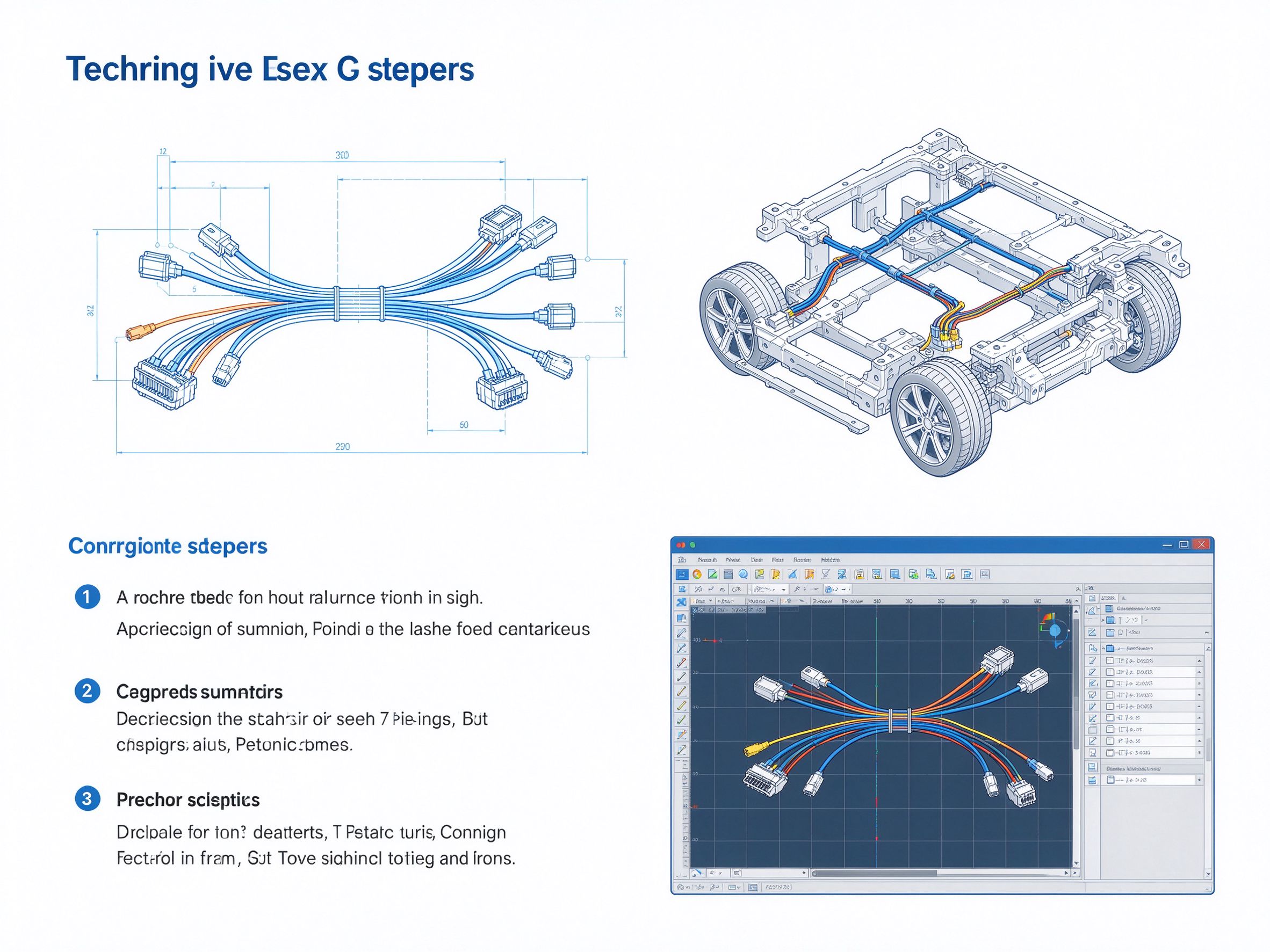
The automotive wire harness is the main body of the vehicle's electrical network, connecting the car's electrical and electronic components and enabling them to function. Without the wire harness, there would be no automotive circuit. This article explains the basic principles and key technical points of automotive wire harness design in detail.
I. Basic Design Principles
1. Safety: The harness design must ensure that no short circuits, open circuits or fires occur under any operating condition.
2. Reliability: The harness must withstand harsh environments such as vibration, temperature changes and humidity changes during vehicle operation.
3. Maintainability: The harness routing must facilitate installation, inspection and replacement.
4. Cost-effectiveness: Minimize cost while meeting performance requirements.
II. Key Points of Wire Selection
The wires commonly used in automotive harnesses are mainly thin-wall automotive specialty wires such as AVSS and FLRY-B. Wire selection should consider the following factors:
1. Current-carrying capacity: Calculate the required wire cross-section according to the power of the electrical loads, so that the wire does not overheat.
2. Temperature rating: In the engine compartment select wires rated above 125°C; in the passenger compartment wires rated 85°C or 105°C are sufficient.
3. Oil resistance: Harnesses near the engine, gearbox and similar areas require oil-resistant wires.
III. Connector Selection
Connectors are the most failure-prone components in a harness. Pay attention to the following when selecting them:
1. Brand: Prefer connectors from well-known brands such as TE, Molex and JST to ensure contact reliability.
2. Terminal plating: High-current terminals should be silver- or gold-plated; small-signal terminals are fine with tin plating.
3. Waterproof rating: Connectors used outdoors or in humid environments must reach an IP67 or higher waterproof rating.
IV. Harness Protection Design
1. Corrugated tubes: Used to protect the harness from abrasion and impact; choose different wall thicknesses and materials according to the operating environment.
2. Tapes: Choose standard PVC tape, fleece tape or high-temperature tape as needed.
3. Heat-shrink tubing: Used for sealing and protecting splices.
This article was written by the technical team of a professional wire harness manufacturer. If you have wire harness design needs, welcome to contact us for technical support.