
Detailed Explanation of the Wire Harness Manufacturing Process
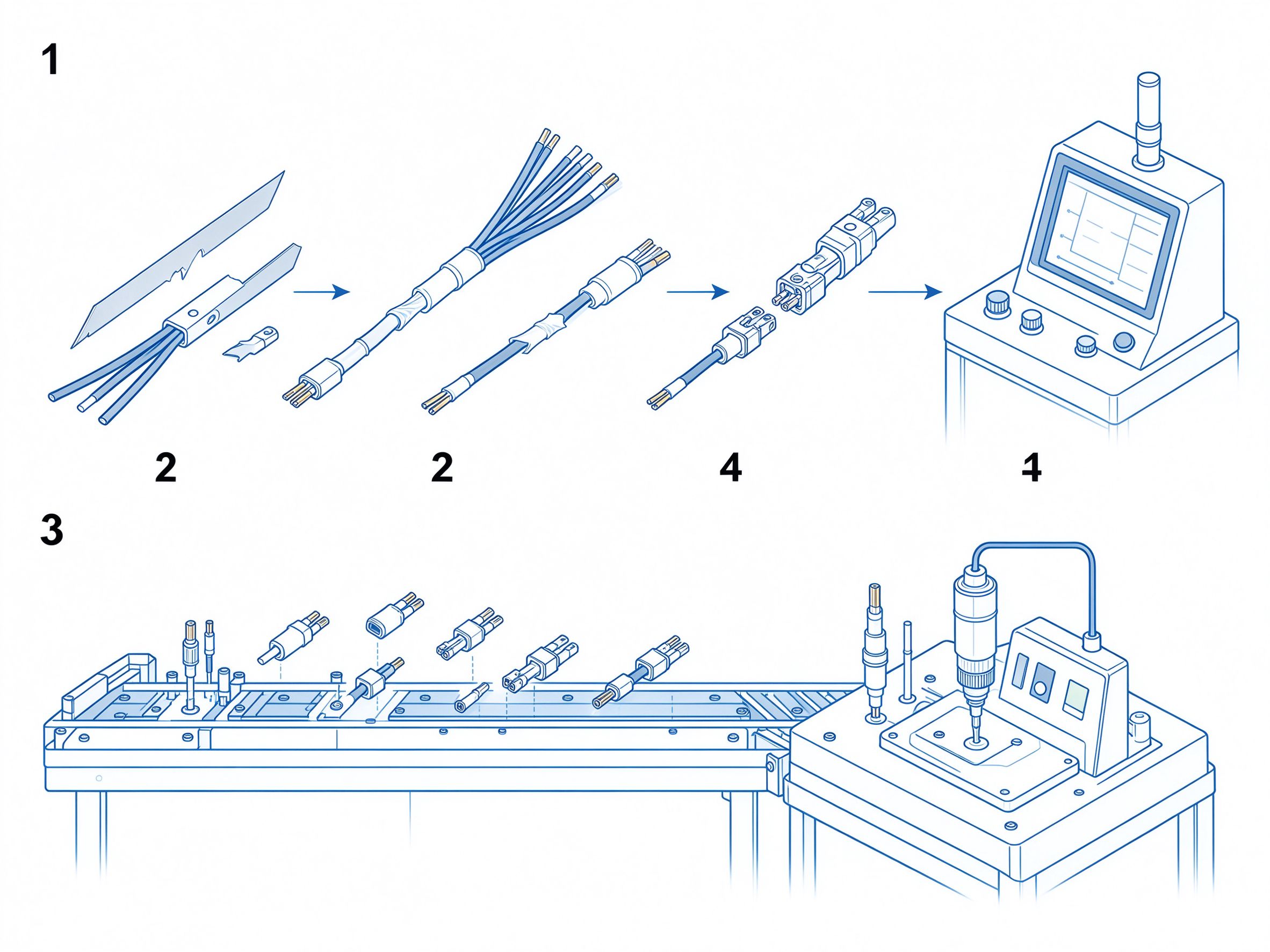
Wire harness processing is the art of combining wires, terminals and connectors into a system-level connection assembly according to drawings. A qualified harness goes through four main stages - cutting, crimping, assembly and testing - and how well these stages connect directly determines final product quality.
1. Cutting Process
Using automatic cutting machines, wires are cut to the required length per the drawing, and insulation is stripped from both ends. Good cutting means clean cuts, precise strip length, and undamaged conductor strands, with tight length tolerances that prepare the way for crimping.
2. Crimping Process
Dedicated crimping tools form terminals onto wire ends through cold metal deformation, creating both electrical and mechanical connections. Crimp height and width must be precisely set according to wire gauge and terminal specification, because crimp quality directly affects contact resistance and pull-out force.
3. Assembly Process
Multiple wires are bundled into a harness per the assembly drawing, secured and protected with corrugated tubing, tape and ties, then fitted with connectors, branch wraps and labels. Routing, branch positions and protection methods all follow documented work instructions.
4. Testing Process
Continuity testers verify open circuits, short circuits and miswiring on every conductor, with high-potential testing added as needed. Each circuit must be correct and the insulation reliable, and only 100% qualified products are packed and shipped.