
Key Points of the Terminal Crimping Process
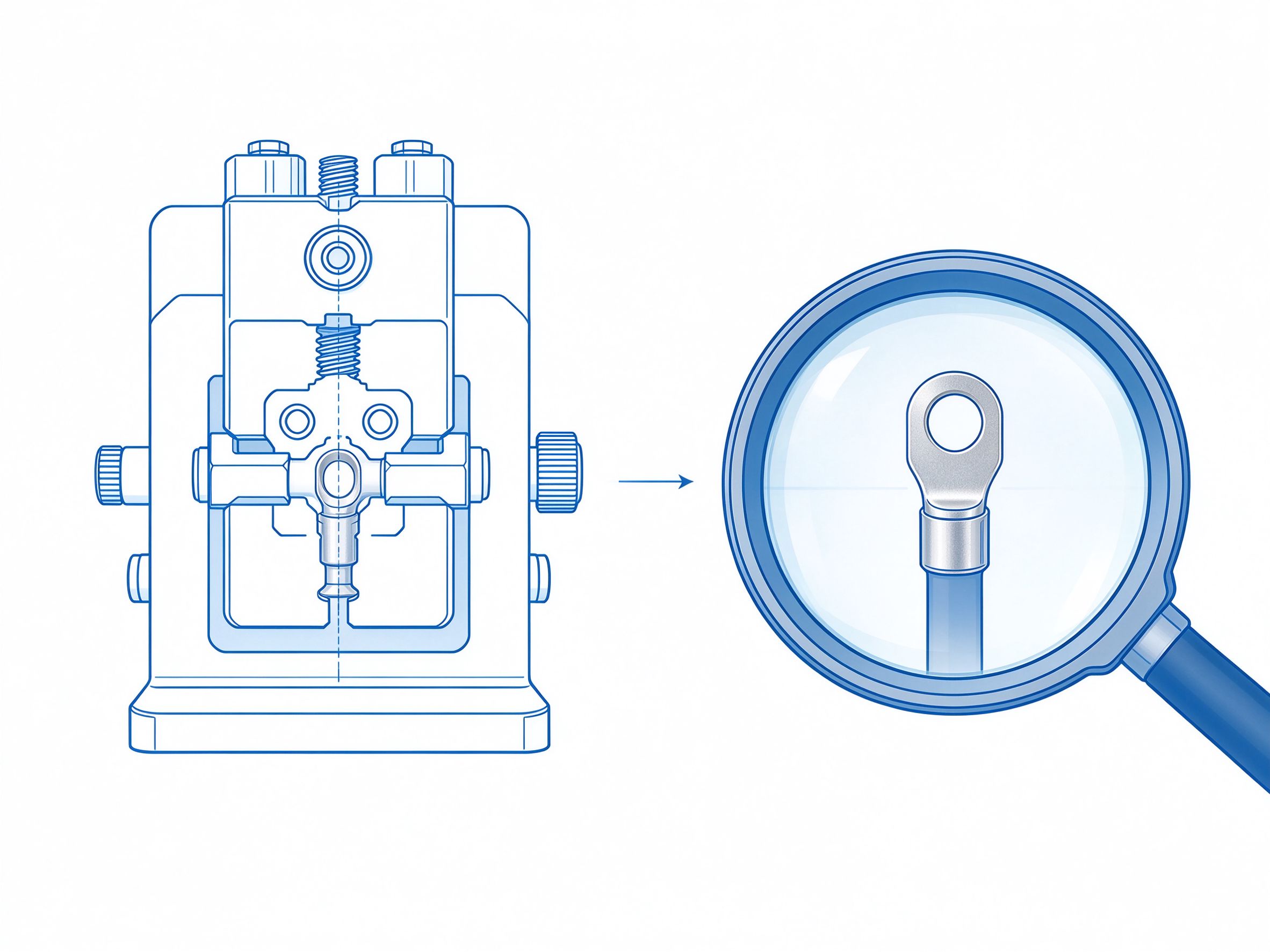
Terminal crimping is one of the most critical processes in harness manufacturing, directly affecting electrical performance and mechanical reliability. Crimping relies on cold deformation of the terminal wings under pressure to grip the conductor and form a stable conductive path. The key process parameters are as follows.
Crimp Height
Crimp height is the core parameter determining crimp quality and must be precisely set according to wire gauge and terminal model. A proper crimp height tightly compresses the conductor within the terminal with full strand deformation, without cutting or over-damaging the wire, balancing conductivity and pull-out strength.
Crimp Width
Crimp width determines the contact area. Too wide causes over-crimping and cracked wings; too narrow leaves the wire insufficiently enclosed and raises contact resistance. It must be tuned together with crimp height to stay within the specified window.
Pull-Out Force Test
Pull-out force testing must be performed after each crimping batch, measuring the force needed to pull the terminal off the wire to confirm it meets the requirements for that gauge and terminal, preventing terminal loosening in service.
Cross-Section Analysis
Periodic cross-section analysis examines conductor deformation, void ratio and burrs under a microscope to judge whether the crimp is stable, so dies and parameters can be adjusted in time to keep batch consistency.