
Shielding Design and EMC for Wire Harnesses
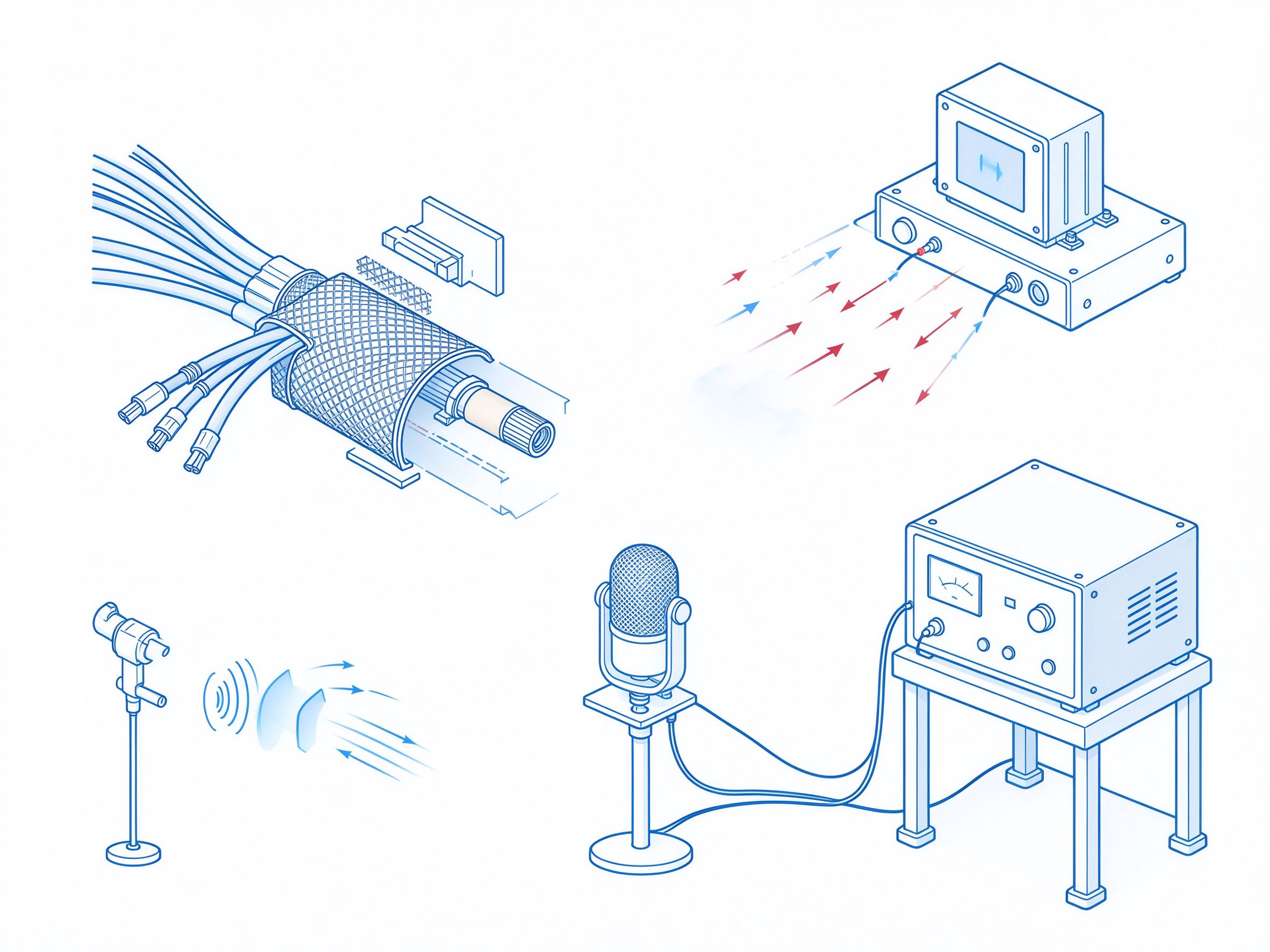
As electronic equipment becomes increasingly complex, electromagnetic compatibility (EMC) issues receive growing attention. The wire harness, as the carrier of signal and power transmission, is both a source of interference and an object susceptible to it. This article details the principles and methods of harness shielding design.
I. Types of Electromagnetic Interference
1. Conducted interference: interference propagating directly through conductors, such as ripple on power lines or noise on signal lines.
2. Radiated interference: interference propagating through space radiation, such as the electromagnetic field radiated by high-voltage harnesses.
3. Crosstalk: interference generated by electric or magnetic field coupling between adjacent harnesses.
II. Basic Principles of Shielding Design
Shielding works by blocking the propagation path of electromagnetic interference. Shielding performance is expressed by shielding effectiveness (SE), measured in dB. The higher the shielding effectiveness, the better the shielding.
Shielding is achieved mainly through the following three mechanisms:
1. Reflection: electromagnetic waves are reflected on the surface of the shield.
2. Absorption: electromagnetic waves entering the shield are absorbed and converted into heat.
3. Multiple reflection: electromagnetic waves decay through multiple reflections inside the shield.
III. Common Shielding Methods
1. Aluminum foil shielding: low cost and good flexibility, but moderate shielding effectiveness; suitable for low-frequency interference.
2. Braided shielding: high shielding effectiveness and bend resistance; suitable for high-frequency interference. The braid coverage is generally required to be above 85%.
3. Double shielding: aluminum foil plus braid, offering the highest shielding effectiveness; suitable for strong interference environments.
IV. Grounding Design of the Shield
Grounding the shield is the most critical part of shielding design:
1. Single-end grounding: suitable for low-frequency applications and avoids ground loops.
2. Double-end grounding: suitable for high-frequency applications and provides better shielding.
3. Grounding impedance: must be as small as possible, otherwise the shielding effect is greatly reduced.
V. EMC Test Standards
EMC testing of harnesses is usually carried out according to the following standards:
1. CISPR 25: electromagnetic disturbance testing of vehicle electronic equipment.
2. ISO 11452: immunity testing of vehicle electronic equipment.
3. IEC 61000: general electromagnetic compatibility standards.
Our company has complete EMC testing equipment and provides harness shielding design and testing services.