Demand for Wiring Harnesses in the Commercial Display Industry Grows Rapidly
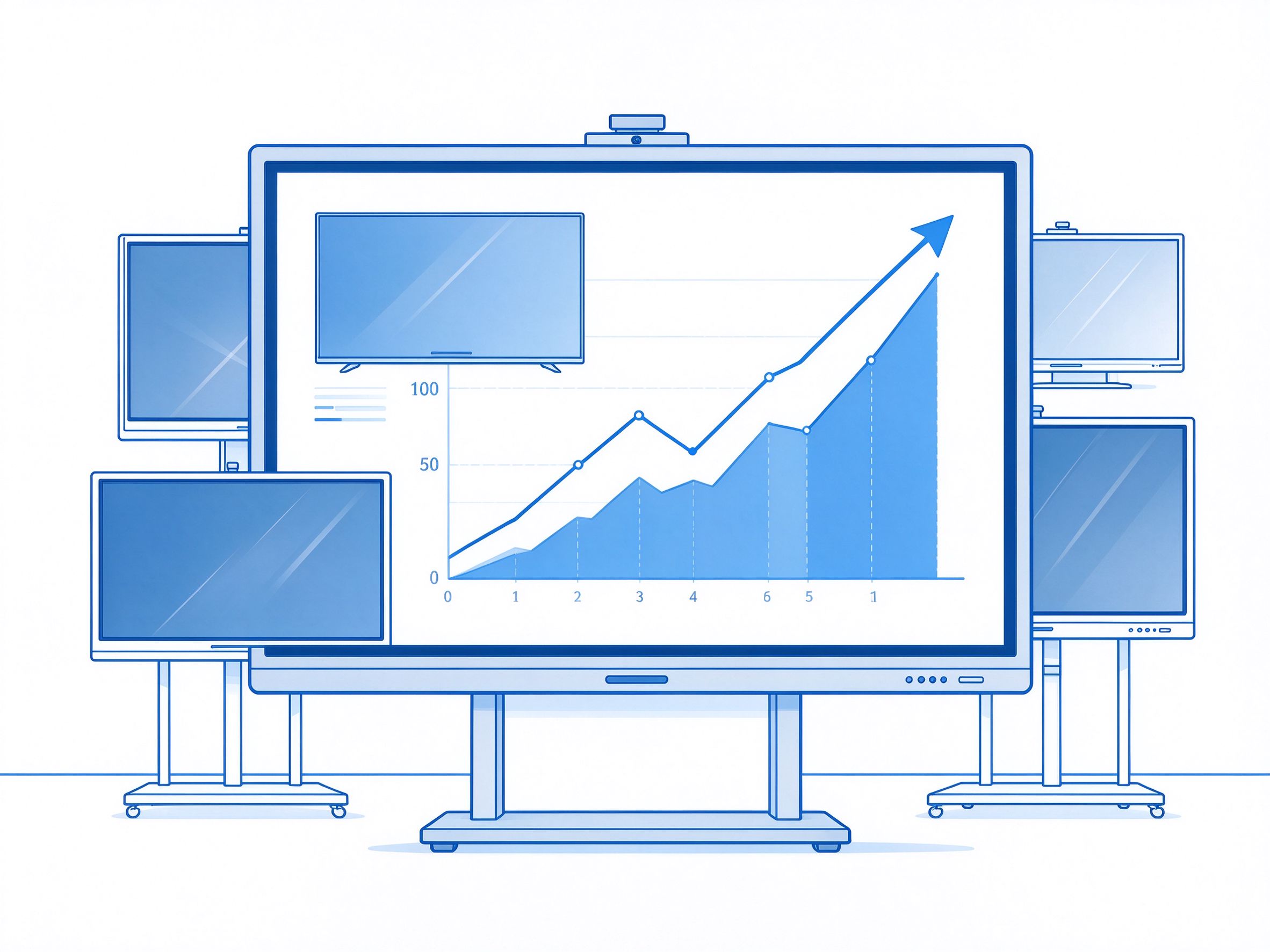
The Commercial Display Industry Drives Harness Demand Growth
In recent years, the commercial display industry has developed rapidly, and shipments of conference flat panels, advertising displays, digital signage and smart screens have kept growing. These products all require a large number of internal harness connections, including LVDS display cables, USB signal cables and power cables, so demand for commercial display harnesses is growing rapidly.
Commercial display devices extend from conference rooms and retail stores to outdoor public spaces, running powered on year-round; the stability of internal connections directly affects the display experience. Internal space is compact, and the harness must carry display signals, USB signals and power while occupying as little volume as possible, creating steady demand for customized processing.
In terms of usage, conference flat panels emphasize interactive experience and long-term stable operation; advertising displays and digital signage often run in unattended environments; smart screens are deeply embedded in home and office scenarios. Different scenarios weigh differently on connection reliability, appearance consistency and maintenance convenience, so harness supply needs targeted design according to the machine's operating environment.
A common feature of these devices is that they present directly to end users, so the neatness of appearance and routing also affects the overall look of the machine; the harness therefore requires meticulous work in labeling, tying and appearance consistency as well.
Thinner, Higher-Definition Designs Raise New Harness Requirements
As commercial display products move toward being thinner, higher-definition and more intelligent, harness requirements keep rising. LVDS cables need higher transmission rates, USB cables must support USB 3.0/3.1 high-speed transmission, and power cables need greater current-carrying capacity. Meanwhile, the compact internal space of commercial display products imposes higher requirements on harness integration and miniaturization.
Display and high-speed signals are sensitive to wire-sequence routing and shielding; poor routing easily introduces interference and affects display stability. Thin bodies require finer harnesses with more compact branches that cooperate well with the machine structure. Such products need harness makers to engage from the solution stage, defining wire length, branches and exit direction according to the machine drawings.
At the same time, commercial display products update quickly and iterate frequently, so harness supply must balance sampling speed with batch consistency: tooling is prepared according to mass-production processes from the sample stage, so the connection scheme the customer sees during prototype validation can be reproduced as-is in mass production.
Our Commercial Display Harness Product Line and Process
We have developed a complete commercial display harness product line, covering conference flat panels, advertising displays, digital signage, smart screens and LED displays, and supplying harnesses to well-known domestic commercial display companies. Products include LVDS display cables, USB signal cables, HDMI cables and power cables, all passing strict signal tests and reliability tests.
In process, cutting and crimping are fully automatic per machine drawings; display and high-speed circuits are grouped and routed as required, with high-current and low-current circuits separated. Branches and fixation points are fixed on jigs; after connectors lock in place, each harness undergoes continuity testing, and signal tests plus appearance and dimension confirmation are completed as required.
Aiming at the compact internal routing of commercial display devices, we coordinate branch division and fixation-point design with the machine structure: harness routing avoids heat-dissipating and moving parts, and exit direction is determined by mating positions, so that insertion is smooth during machine assembly and replacement is convenient during maintenance.
For models that require frequent disassembly for maintenance, the harness also gets targeted arrangements in connector selection and labeling, so that after-sales replacement cannot be inserted incorrectly and is easy to identify on site.
In the future, as the commercial display industry keeps developing and technology upgrades, the commercial display harness market will maintain rapid growth. We will keep developing higher-performance commercial display harness products to meet customer demand.
Quality Inspection and Reliability Assurance
Commercial display harnesses are produced under controlled processes: wires and connectors undergo incoming inspection on arrival; crimping and assembly are in-process checked against work standards; each finished harness undergoes outgoing continuity testing; display and high-speed products complete signal-related tests per drawings.
Inspection records are archived by batch and combined with batch and serial-number traceability, so any batch can be traced back to raw material lot and process parameters; relevant materials can be quickly organized and provided during customer audits or quality inquiries.
Commercial display products run powered on year-round, and connection reliability directly affects the end experience. Each finished harness undergoes continuity testing before shipment; display and high-speed products complete signal tests per drawings; appearance and dimensions are sampled against standards; inspection records are archived by batch for the customer's later O&M traceability.
FAQ
Q: Can commercial display harnesses be customized according to machine drawings?
A: Yes. Wire length, branch positions, exit direction and sheathing method are all customized to the machine structure, and display, USB and power harnesses can be developed together in one project.
Q: How is signal quality guaranteed for high-speed display harnesses?
A: Circuits are grouped and routed per drawings with high-current and low-current circuits separated; circuits requiring shielding are treated and shielding continuity is confirmed; finished products complete required signal tests before shipment.
Q: Internal space is compact—can the harness be made smaller?
A: Yes. We compress occupied volume through wire-gauge selection and branch division, and adjust exit direction and fixation points to the machine structure, avoiding interference with internal components.
Q: What is the process from sampling to batch delivery?
A: Details are aligned stage by stage from drawing review and first article confirmation to batch delivery; tooling and jigs are prepared per mass-production processes from the sample stage, and specific milestones are assessed per project.
Contact Us
For inquiries about commercial display harness supply, prototyping or solution evaluation, please share your drawings or samples, and our engineering team will reply with a proposal and sampling plan after evaluation. We are located at 7th Floor, Unit 2, Building E1-1, Qunyi Intelligent Manufacturing Industrial Park, No. 3 Xingyuan South Road, Start-up Area, China-Korea (Huizhou) Industrial Park, Zhongkai High-tech Zone, Huizhou; email sz136138@szfandouai.cn, phone 18929363263 (WhatsApp +86 18929363263).