New Energy Vehicle Wiring Harness Market Continues to Grow
The High-Voltage Harness Market Keeps Expanding
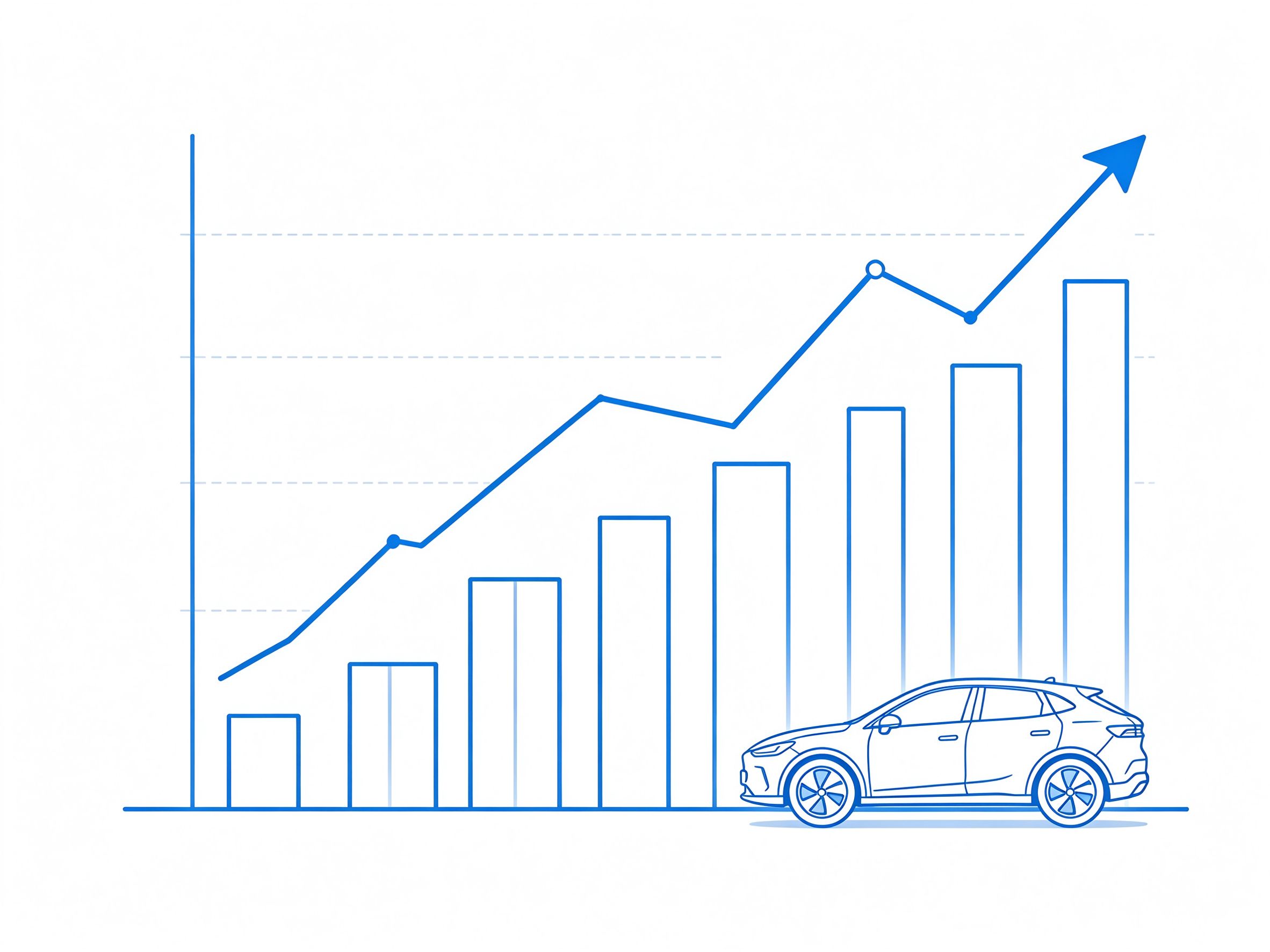
According to the latest industry reports, global new energy vehicle sales exceeded 18 million units in 2024, up 35 percent year on year. The market size of new energy vehicle wiring harnesses is expected to reach 80 billion yuan, with high-voltage harnesses accounting for more than 40 percent, showing rapid market growth.
The core difference between new energy vehicles and conventional fuel vehicles lies in the high-voltage connection demand brought by the three-electric system: from the traction battery to the electric drive, and from the charging port to the high-voltage distribution unit, the vehicle is filled with high-voltage circuits that transmit and distribute energy. The harness is no longer a set of ordinary conductors, but a key component directly related to vehicle safety, energy consumption and reliability. As vehicle platforms iterate and model cycles accelerate, the content value of high-voltage harnesses keeps rising and their customization level grows higher.
High-Voltage Platforms Raise Harness Technical Requirements
As a key component of new energy vehicles, high-voltage wiring harnesses have high technical thresholds and high added value. With the popularization of the high-voltage platform, higher requirements are placed on voltage resistance, temperature resistance and shielding performance. Meanwhile, battery management systems, charging systems and motor control systems all require a large number of customized harnesses.
High-voltage circuits carry large currents and strong electromagnetic radiation during operation, which can easily interfere with nearby low-voltage signal circuits. Therefore high-voltage harnesses generally require effective electromagnetic shielding, and high-current and low-current circuits must be routed in separate zones in the vehicle layout. The insulation reliability and terminal crimping consistency required at high-voltage connection points are also clearly higher than those of conventional low-voltage harnesses; developing such products requires harness makers and vehicle customers to engage from the solution stage, confirming current-carrying design, shielding structure and protection method item by item.
Looking at the vehicle circuit architecture, the battery pack interior, the charging port to the high-voltage junction box, and the junction box to the electric drive each have different connection characteristics: some circuits focus on vibration resistance and temperature tolerance, some on shielding and protection, and others on connector locking and safety interlock coordination. Harness makers need to integrate these circuits into one product solution according to the vehicle drawings, and then ensure consistent implementation through process and inspection.
Our High-Voltage Harness Layout and Supply Capability
Our company has deployed high-voltage harness production lines for new energy vehicles, with complete capabilities in high-voltage harness design, production and testing. Products cover battery pack harnesses, motor controller harnesses, charging port harnesses and high-voltage junction box harnesses, and we have supplied many leading domestic new energy vehicle enterprises.
In process organization, we carry out automatic cutting and terminal crimping according to customer drawings, with key parameters such as crimp height and cut length controlled throughout. Branches and routing are fixed on jigs; after connectors are inserted, locking is confirmed in place, and shielding continuity is verified for circuits that require shielding. Tooling and jigs are prepared according to mass-production processes from the sampling stage, avoiding any quality gap between samples and batch products.
Facing the differentiated requirements of different vehicle platforms, our engineering team coordinates with customers early on interface layout and operating conditions, and delivers customized solutions from selection, branch division to fixation method, so that the harness meets electrical connection requirements while adapting to the vehicle's installation space and operating environment.
In the future, as the penetration rate of new energy vehicles keeps rising and high-voltage platform technology matures, the high-voltage harness market will maintain rapid growth. Our company will continue to increase R&D investment and develop higher-voltage products with better shielding performance to meet market demand.
Quality and Inspection Assurance
The reliability of high-voltage harnesses is directly related to vehicle operating safety. We organize production according to automotive industry quality management requirements, implement core tools such as production part approval, failure mode and effects analysis, and advanced product quality planning, and apply process control to key operations such as cutting, crimping and continuity testing, to ensure batch-to-batch consistency.
During mass production we run a complete quality-control process: incoming material inspection, in-process inspection of crimping and assembly, and outgoing final inspection. Wires and connectors undergo incoming inspection first; crimping and assembly are patrolled against work standards; each finished harness undergoes a continuity test and is checked against the drawings for wire sequence, routing and labeling before moving on. Inspection records are archived by batch, and everything from the wire lot and terminal lot to the finished-product serial number is traceable; relevant records can be provided directly during customer audits.
Beyond routine inspection, products complete the safety test items required by customer specifications, with test records retained by batch. Parameters involving key characteristics are listed as focus-monitored objects in the system, and process data continuously tracks their trends, so that abnormalities in mass production can be identified at an early stage.
FAQ
Q: How do high-voltage harnesses differ from ordinary low-voltage harnesses in process?
A: Besides conventional cutting, crimping and assembly, high-voltage harnesses impose higher requirements on shielding treatment, insulation reliability and connector locking, with stricter in-process checks and outgoing inspection items. The specific solution is customized according to vehicle drawings and actual operating conditions.
Q: Can customized high-voltage harnesses be developed according to vehicle drawings?
A: Yes. From solution review and sample confirmation to batch delivery, the engineering team organizes development according to customer drawings and samples; wire length, branch positions and exit direction can all be adjusted to the equipment structure, and development milestones are assessed per project.
Q: Can product traceability records be provided to customers?
A: Yes. Wire lot, terminal lot, process parameters, inspection records and finished-product serial numbers are retained throughout, and can be organized and provided as required, to support the customer's quality analysis and after-sales management.
Q: How do you support switching when a customer issues an engineering change?
A: The engineering team engages early in solution review; after the change is confirmed, new samples are made per the updated drawings and first article inspection is completed, and the transition batch is separately labeled and recorded. The specific response arrangement can be confirmed with our engineering team.
Contact Us
For inquiries about new energy vehicle high-voltage harness supply, prototyping or system audits, please share your drawings or samples, and our engineering team will reply with a proposal and sampling plan after evaluation. We are located at 7th Floor, Unit 2, Building E1-1, Qunyi Intelligent Manufacturing Industrial Park, No. 3 Xingyuan South Road, Start-up Area, China-Korea (Huizhou) Industrial Park, Zhongkai High-tech Zone, Huizhou; email sz136138@szfandouai.cn, phone 18929363263 (WhatsApp +86 18929363263).