New Progress in Automated Production Technology for Wiring Harness Processing
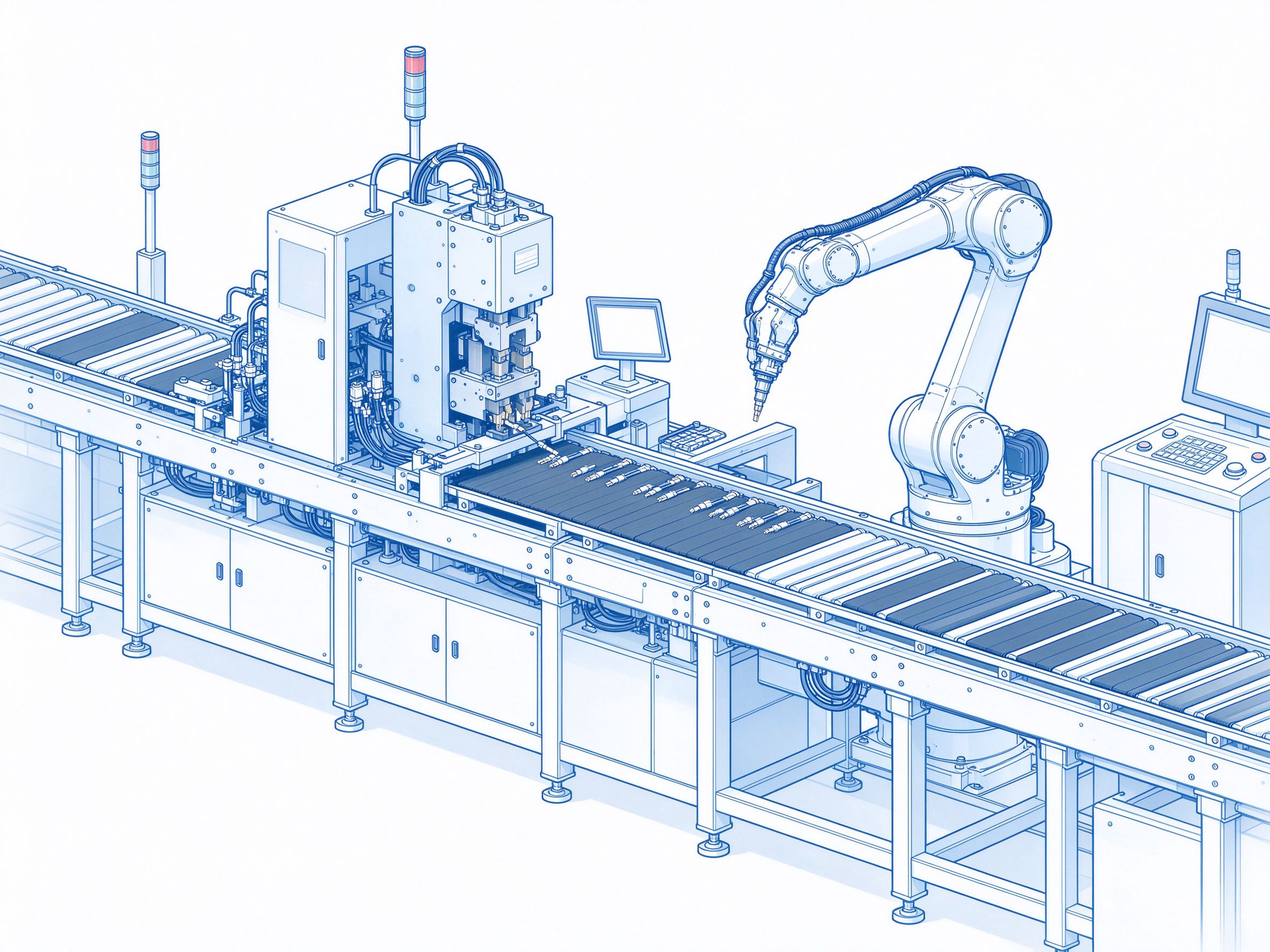
Automation Trends in Wire-Harness Processing
The wire-harness processing industry is moving toward automation and intelligence. The application of automated equipment such as automatic cutters, automatic crimping machines and automatic assembly lines has greatly improved production efficiency and product consistency, while reducing the variation caused by manual operation.
Wire-harness products come in many varieties with widely differing batch sizes. In the past, relying on manual cutting and crimping, dimensions and pull-out force tended to fluctuate with the operator's condition; automated equipment stores cut length, stripping dimensions and crimping parameters in machine programs, so that every batch runs to the same standard, consistency is markedly improved, and human error from repetitive labor is reduced.
Behind this transformation is a change in customer demand: batches are growing larger, varieties are multiplying, and delivery cadence is tightening. Simply adding headcount can neither stabilize quality nor match the customer's mass-production takt, so automation and digitalization have become the industry's inevitable choice.
From the manual era to semi-automatic and then to fully automatic continuous flow, the evolution of wire-harness processing has always revolved around consistency and efficiency: the more mature the equipment, the more human experience is codified into process parameters, the less product quality depends on individual operation, and the more predictable the delivery cadence.
Fully Automatic Lines Achieve Continuous Flow
Our company has introduced a fully automatic wire-harness processing production line, equipped with automatic cutting and crimping machines, automatic assembly lines and automatic continuity test lines, achieving continuous flow from wire cutting and terminal crimping to sub-assembly, final assembly and finished-product testing. After the automation upgrade, production efficiency improved by more than 50 percent and the product defect rate dropped below 100 ppm, reaching an industry-leading level.
The value of continuous flow lies beyond speed: intermediate handling and waiting between operations are reduced, the length of product in process is shortened, and process status is easier to monitor. The automatic continuity test line bakes finished-product inspection into the end of the line, so non-conforming products are identified and isolated as they flow, before reaching the next operation.
For multi-variety orders, machine programs are called up by drawing; when switching production, operators only confirm parameters and jig status. Sampling and mass production use the same process documents, avoiding any gap between the sample stage and the mass-production stage.
Another layer of value from continuous flow is staffing: once repetitive operations are handled by equipment, on-site personnel shift to roles that require more judgment, such as parameter confirmation, first article inspection and abnormality handling, making the whole line run more stably.
MES Digital Management and Full-Chain Traceability
On top of automated production, our company has introduced an MES manufacturing execution system to achieve digital management of the production process: from order release to finished goods outbound, key data such as cut length, crimping parameters and test results are all recorded in the system and traceable, ensuring the production process is transparent and controllable.
The system records bind equipment parameters, inspection results and batch information together: any batch of finished goods can be traced back to the wire lot and terminal lot used, and when an abnormality occurs, the affected scope can be quickly locked for targeted re-inspection and correction. For customers, this means every delivered batch has an accessible process file.
Digital management also shows in customer collaboration: order progress, batch status and inspection records are available online; when customers raise delivery or quality inquiries, corresponding stage information can be quickly pulled from the system, reducing repeated communication costs.
Data continuity also provides a basis for continuous improvement: what type of crimping problem occurs more often, which operation fluctuates more, can all be seen in the records, so that improvement measures are well targeted.
In the future, our company will continue to advance intelligent manufacturing, introducing machine vision and AI inspection and other advanced technologies to further improve production efficiency and product quality, building an industry-leading digital wire-harness factory and providing customers with more stable and efficient products and services.
Process Control and Quality Inspection
Stable operation of the automated line is built on strict process control: first article inspection confirms that equipment status matches work standards, in-process patrol inspection samples crimping and assembly quality by takt, and outgoing final inspection completes a continuity test on every finished harness, making continuity testing a mandatory pre-delivery item.
Process data for key parameters enters the system in real time: once cut length or crimp height deviates from the control range, the equipment prompts adjustment; in-process patrol inspection and outgoing continuity testing form a double gate, so non-conforming products do not flow to the next operation.
Incoming inspection gates the quality of wires and connectors; in-process checks of crimping and assembly are fixed between operations; inspection data enters system records synchronously and is archived together with batch information, achieving full traceability from raw materials to finished products.
FAQ
Q: Are automated lines suitable for small-batch, multi-variety orders?
A: Yes. Machine programs switch by drawing, and sampling and mass production use the same process parameters; small-batch, multi-variety orders are likewise produced under controlled processes, and the specific scheduling is assessed per project.
Q: Can product process data be provided to customers?
A: Yes. Key data such as cut length, crimping parameters and test results are all recorded in the system and can be organized and provided as required, to support quality analysis.
Q: How is product consistency guaranteed after automation?
A: Parameters are baked into machine programs, and with first article inspection, in-process patrol inspection and outgoing continuity testing, different batches run to the same standard, and abnormalities are identified and corrected during the process.
Q: How do you quickly locate a quality problem?
A: Relying on traceability records of batch, terminal lot and serial number, we can quickly scope the affected batch and organize re-inspection and correction; the handling progress can be aligned with our engineering team.
Contact Us
For inquiries about automated wire-harness processing supply, prototyping or factory audits, please share your drawings or samples, and our engineering team will reply with a proposal and sampling plan after evaluation. We are located at 7th Floor, Unit 2, Building E1-1, Qunyi Intelligent Manufacturing Industrial Park, No. 3 Xingyuan South Road, Start-up Area, China-Korea (Huizhou) Industrial Park, Zhongkai High-tech Zone, Huizhou; email sz136138@szfandouai.cn, phone 18929363263 (WhatsApp +86 18929363263).