
Verifying Delivery Kitting and Scan Error-proofing: Sampling, Kit Check, Interception and Verdict
Validation boundaries and sampling
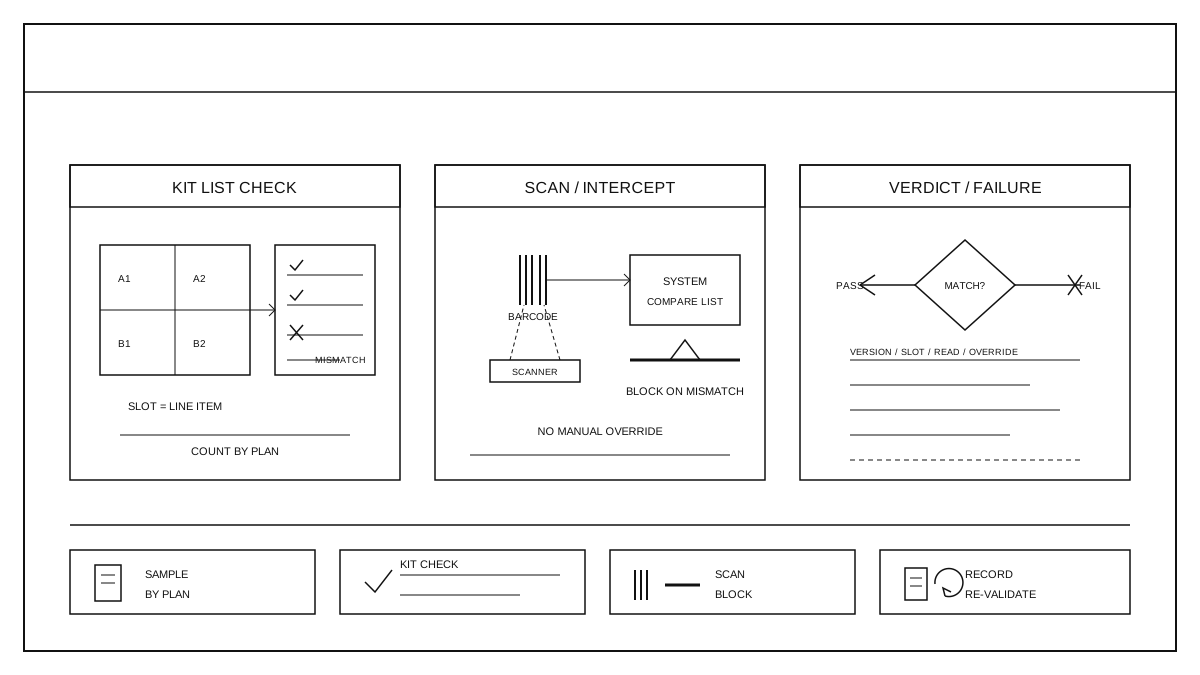
The objects of verification are the material boxes, the kit lists, and the scanning verification actions before a workstation goes online. The goal is to confirm that the materials in the boxes match the work orders and that error-prevention devices can detect missing or incorrect parts. Samples cover different product models, different box configurations, and delivery batches from different shifts. Work order numbers, box numbers, delivery workstations, delivery times, and operators are recorded. Sampling conditions follow the verification plan, and results from a single box do not represent the entire batch. The verification does not evaluate operator proficiency nor change normal delivery processes; the selected boxes are individually checked before going online, with all verification status, deviations, and interception actions recorded. After confirmation, the boxes are released for online use.
Kitting List and Material Box Error-Proofing Check
Check against the complete parts list as the standard, counting the material models, specifications, quantities, and positions in the material box line by line, ensuring consistency with the work order, drawings, and process documents. Error-proof verification of the material box includes checking whether the partition slots correspond to the list, whether slots with missing materials have stoppers or empty box markers, and whether incorrect materials are blocked by structural limits. During verification, proceed slot by slot according to the list order, without skipping or jumping slots; if there is extra, missing, wrong model, or mixed materials, record the slot and material on the spot, stay in the current box for rechecking, and do not carry deviations to the next workstation. The list version, material box number, and verification results should be recorded in the batch record according to the process documents.
Scan code verification and incorrect/missing item intercept
The barcode check is performed before the material box goes online. Scan the work order barcode and the material box barcode, and the system compares the material details against the complete set list. Error prevention interception targets missing materials, wrong materials, extra materials, and sequence errors: if the scanning result of any material does not match the list, or a required material is missing, an interception is triggered, and the material box is not allowed to proceed. During verification, it is recorded whether the interception occurred before the material went online, whether it only intercepted the target deviation, and whether there were any missed or false interceptions. Scanning actions, interception records, and release conclusions are retained according to process documentation; there is no manual re-scanning or bypassing system checks; material boxes that are intercepted are returned to the distribution end for processing and then re-scanned.
Determination and Failure Modes
The judgment is carried out according to the criteria specified in the verification plan, drawings, and process documents: completeness and consistency, correct interception actions, and any omissions or incorrect interceptions beyond the allowable range are judged as failures. Common failure modes include inconsistent versions between the checklist and the work order, misaligned slots in material boxes allowing incorrect materials to flow in, missed or repeated scans by scanning devices, bypassing by manual intervention after interception, and undetected multiple materials. Each failure location, triggering condition, and handling method should be recorded individually, retaining interception screenshots or system records. Any single critical failure results in a failed verification; the conclusion for the entire batch is determined according to the sampling plan and should not be inferred from individual compliant boxes.
Batch Records and Reverification
Record the work order number, material box number, sampling quantity, completeness check results, number and types of scan interceptions, failure modes, and verification conclusions to form traceable batch records. After verification, check whether the error-proof structure of the material box, the status of the scanning equipment, and the version of the list still match the on-site conditions. After changes to material box configuration, completeness lists, scanning logic, or workstation layout, reorganize the verification and do not reuse old conclusions. On-site practices for distribution and error-proof processes can be found at Pre-line delivery and error-proofing process for wiring harness final assembly workstations: delivery rhythm, error-proofing of material boxes, barcode scanning verification, and pre-line confirmation.