Development Trends of Wiring Harness Technology in the Context of Industry 4.0
Trend Background: Industry 4.0 Sets New Requirements on Connection Systems
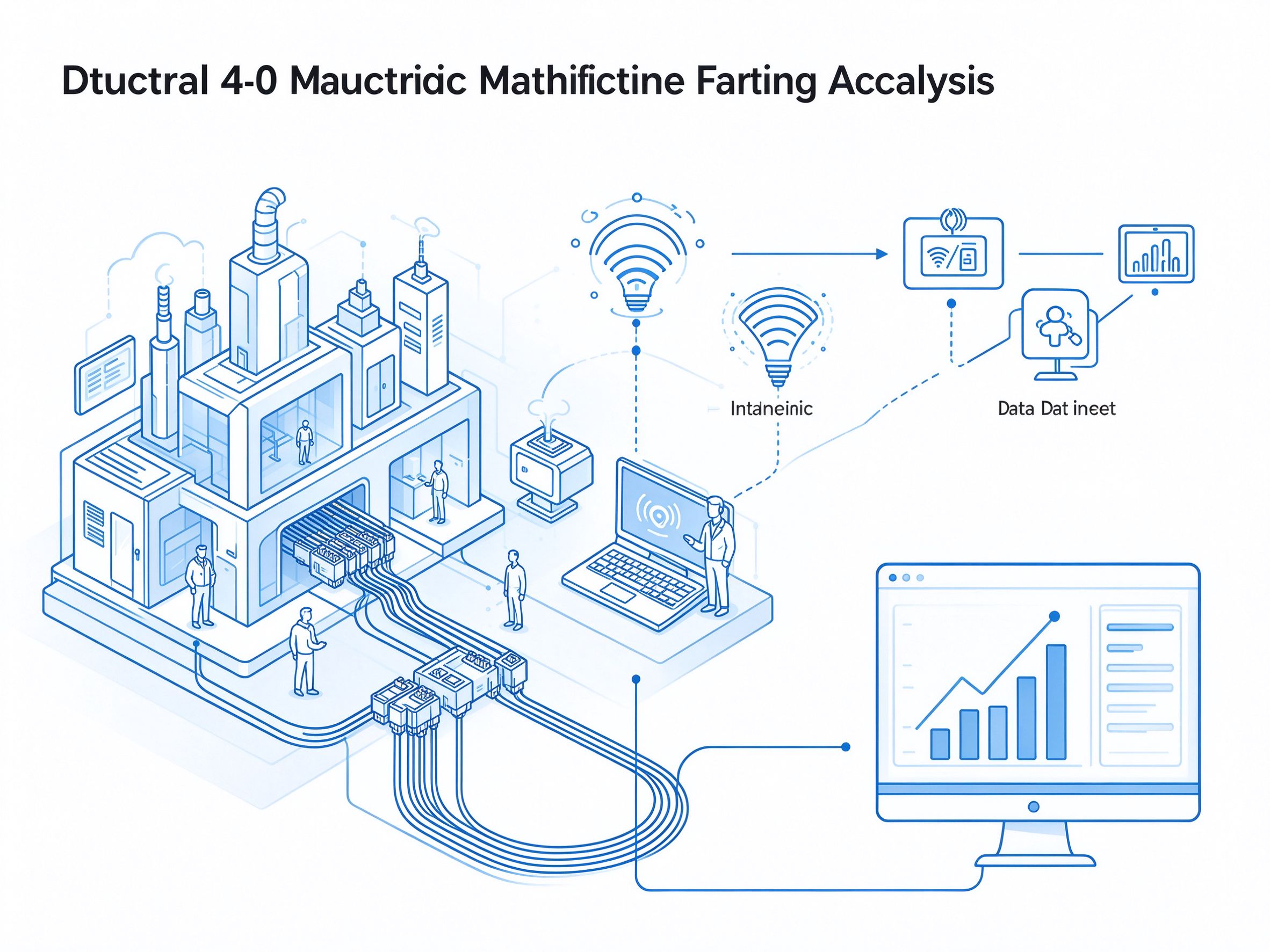
In the Industry 4.0 era, intelligent manufacturing, industrial internet and digital twin technologies are developing rapidly and placing new requirements on industrial harnesses. This article analyzes the development trends of harness technology against the Industry 4.0 background.
The higher the automation and intelligence of industrial equipment, the denser the connections among moving parts, sensors and control units; the harness has evolved from a traditional fixed wire into a key component that must adapt to motion, sense state and carry multiple signals. The reliability of the connection system directly determines whether intelligent equipment can run stably long-term.
Industrial harness applications span robot bodies, automated production lines, control cabinets and sensor networks, and different scenarios differ greatly in motion freedom, protection method and signal density, so customization is the industry norm.
Interpreting the Four Development Trends
First is high flexibility: harnesses in industrial robots and automated production lines must endure millions of bends and twists, and traditional harnesses fail quickly, so high-flexibility drag-chain cables have become a must. Second is intelligence: smart harnesses with built-in sensors monitor temperature, current and vibration in real time for predictive maintenance. Third is integration: power, signal and communication wires are integrated into one harness, reducing installation space and connector count. Fourth is digitalization: the whole design, production and testing process is digitally managed, achieving quality traceability.
The essence of high flexibility is that the harness must move along with joints and drag chains, so wire structure, jacket material and bending radius must be specially designed for the motion condition; intelligence turns the harness itself into a data-collection entry point, shifting maintenance from repair-after-breakdown to measurable state and early warning; integration corresponds to the constraints of internal equipment space, with power and signals separated and integrated into neat branches along routing, improving both assembly efficiency and noise immunity; digitalization leaves traces of every harness batch's production, so quality problems can be traced back to a specific batch and operation.
Looking at the equipment's full life cycle, harness failure is often one of the common causes of machine downtime, so a predictable and traceable connection system has become an important part of reliability design for intelligent equipment.
Our Industrial Harness Product Layout
Keeping pace with industry trends, we have developed new products such as high-flexibility robot harnesses, smart sensor harnesses and integrated industrial harnesses, and introduced an MES manufacturing execution system to achieve digital management of the whole harness production process.
In specific products, robot and drag-chain scenarios use high-flexibility wires, and harness design reserves twist and bend margins to avoid damage during long-term motion; sensor harnesses group signal circuits by acquisition requirements and apply shielding treatment; integrated solutions integrate branches along equipment routing, with power and signals in separate zones, reducing connector count inside the cabinet. All products are customized in length, wire sequence and branch structure per machine drawings, and jigs and inspection specifications are fixed during sampling.
Aiming at different operating conditions, we confirm motion mode, installation space and interface layout with customers early in the project, then organize selection and structural design; wire length, branches and exit direction are adjusted to the machine structure, avoiding the consistency problems brought by field cutting of standard wires.
Digital Production and Quality Traceability
Relying on the MES manufacturing execution system, every link from order release to finished goods outbound is recorded in the system: key data such as cut length, crimping parameters and continuity test results are associated with batch information, and everything from wire lot and terminal lot to finished-product serial number is traceable.
During mass production we run a complete quality-control process of incoming material inspection, in-process inspection of crimping and assembly, and outgoing final inspection, with continuity testing as a mandatory outgoing item. Relying on digital records, batch-product consistency can be reviewed by batch, and when a quality abnormality occurs, the affected scope can be quickly located and corrective action taken, which aligns with industrial customers' requirement for long-term reliable equipment operation.
For products oriented to overseas markets, wire and connector selection also takes into account UL 758 and UL 1059 related requirements, making it easier for customers to complete certification integration and compliance management.
FAQ
Q: What should be noted when selecting wires for robot and drag-chain scenarios?
A: The focus is motion mode and bending radius; high-flexibility wires must withstand frequent bending and twisting, and structural design should reserve motion margins. Specific selection is assessed per equipment condition.
Q: How do smart sensor harnesses handle signal interference?
A: Signal circuits are grouped by acquisition requirements and shielded, power and signals are routed in separate zones, and the shielding structure stays continuous during assembly and is confirmed by testing per drawings.
Q: What assembly work can integrated harnesses reduce?
A: After power, signal and communication wires are integrated into neat branches, connector count and insertion points inside the cabinet decrease, machine routing becomes neater, and later maintenance can identify circuits by branch.
Q: Can industrial customers request production traceability data?
A: Yes. Production process data and batch information are recorded in the system, and inspection records can be archived and provided as required, supporting equipment-side quality management and after-sales analysis.
Contact Us
In the future, as automated lines and intelligent equipment further spread, industrial harnesses will keep evolving in bend resistance, anti-interference and state sensing. We will keep tracking technology trends and provide industrial customers with more reliable connection solutions.
For industrial harness supply support, please share your drawings or samples, and our engineering team will reply with a proposal and sampling plan after evaluation. We are located at 7th Floor, Unit 2, Building E1-1, Qunyi Intelligent Manufacturing Industrial Park, No. 3 Xingyuan South Road, Start-up Area, China-Korea (Huizhou) Industrial Park, Zhongkai High-tech Zone, Huizhou; email sz136138@szfandouai.cn, phone 18929363263 (WhatsApp +86 18929363263).