
Backshell torque and shield closure verification: sampling, loading, resistance and disposition
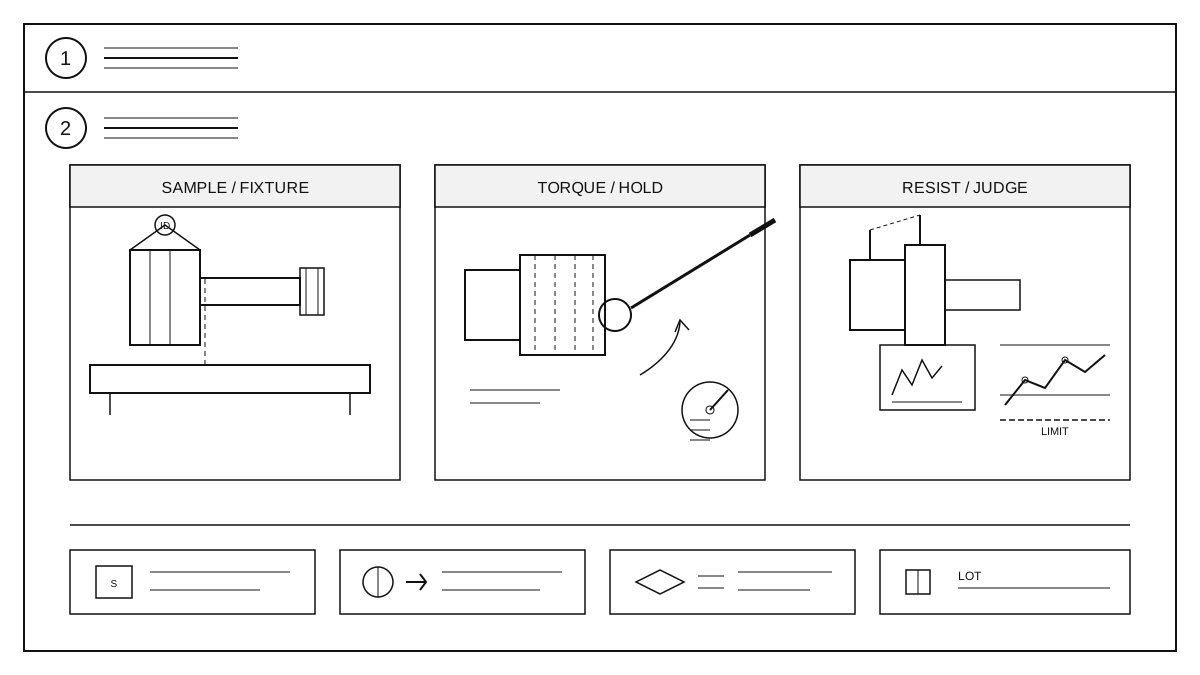
Test boundary: two results to verify
This test verifies backshell torque retention and shield closure, not just electrical continuity. It covers the shell, clamp, shield ring and seal, and accept limits come from the drawing and process document. Keep three results separate: accessory retention, shield continuity and seal appearance; one continuity reading does not represent the whole conclusion.
Sampling and conditioning
Take first, middle and last pieces from the lot and cover different cable sizes and exit directions. Prepare the crimp and shield closure as in production, then condition the samples as the process document requires. Record connector series, accessory part number, torque setting, shield type and operator; link each sample number to its lot.
Torque application and retention
Use a calibrated torque wrench with the specified adapter and apply force along the thread axis. Stop at the set torque, mark the shell and do not tighten again. Record the angle, any noise and whether the shell sits against the connector. After mounting the sample, check that the clamp holds the cable jacket.
Shield closure resistance and continuity
Measure from the shield ring to the connector shell with the method required by the equipment, using the ring, shell and connector body as contact points. Clean the contact surfaces and keep the probe off insulation. Take three stable readings per sample and record the ambient conditions. If continuity fails, check broken braid, oxidation and insufficient compression first.
Disposition and batch handling
Judge against drawing limits and the process document; a single low reading does not represent the lot. Record torque, resistance and appearance for accepted lots; isolate failed lots and label the failure mode. Retest only undamaged samples and record destructive samples separately. Write the disposition back to the inspection record. backshell assembly process