
Conduit abrasion and braided sleeve port pull-out test: sampling, fixture, loading and judgment
Test boundary: what is and is not verified
This test covers abrasion of corrugated conduit against a specified abrasive medium and axial pull-out of the braided sleeve end lock. It does not cover long-term vibration life, chemical ageing or vehicle road profile, and it does not replace the drawing's bend radius and routing definition. The result applies only to the sampled diameter, wall thickness, braid density and port treatment.
Sampling and conditioning
Take samples from the same production batch as the harness and record batch, size, wall thickness, braid density, port process and conditioning time. Cut the conduit and sleeve to the length used on the harness, keep the port treatment identical to production, and mount the sample on a representative bundle section. Use the number of samples defined in the test plan; do not replace it with a few hand-picked pieces.
Abrasion test: fixture, stroke and endpoint
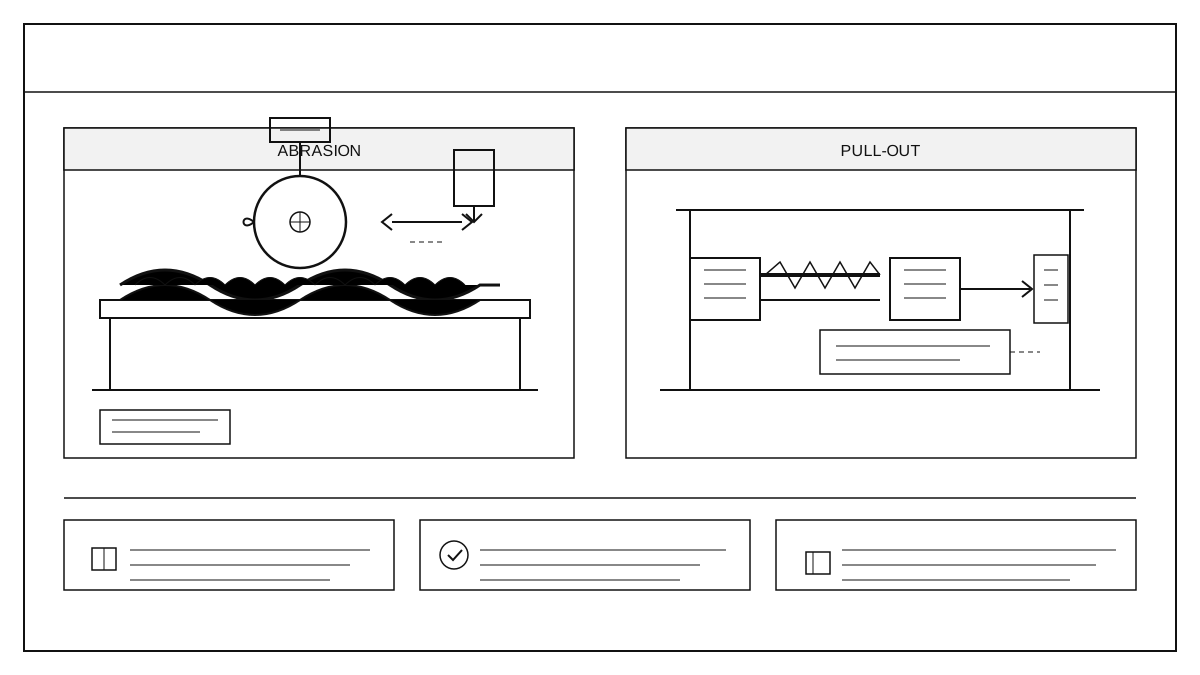
Clamp the conduit on a rigid bed without flattening the corrugation. Set the abrasive wheel or reciprocating pad to the specified load, stroke and frequency, and keep the contact line on the same generatrix. Stop at the specified interval or when the conduit is worn through and the bundle is exposed. Record cycles, time, wear depth and the first point of exposure; do not continue after breakthrough.
Port pull-out: grip, direction and record
Grip the conduit body and the sleeve end without clamping the wires or crushing the braid. Apply axial load at the specified rate in the direction that opens the port, and record first slip, visible displacement and complete separation. For a braided sleeve, also check the fused or taped end lock after the pull; repeat assembly and disassembly if the plan requires, and inspect for permanent deformation.
Judgment and batch action
Judge against the drawing or test specification limit, not against 'it did not fall off immediately'. Record sample ID, batch, load direction, maximum force, failure mode and test conditions. If the sample exceeds the limit, slips early or the port opens, isolate the batch and retest with tightened sampling. If retest still fails, stop the batch and trace conduit, sleeve and bundle source. See the process article for routing and termination: conduit and braided sleeving process.