
Sheath Pullout and Branch Fixation Retention Verification: Sampling, Pulling Direction, Holding Force, and Judgment
Verification Boundary and Sampling
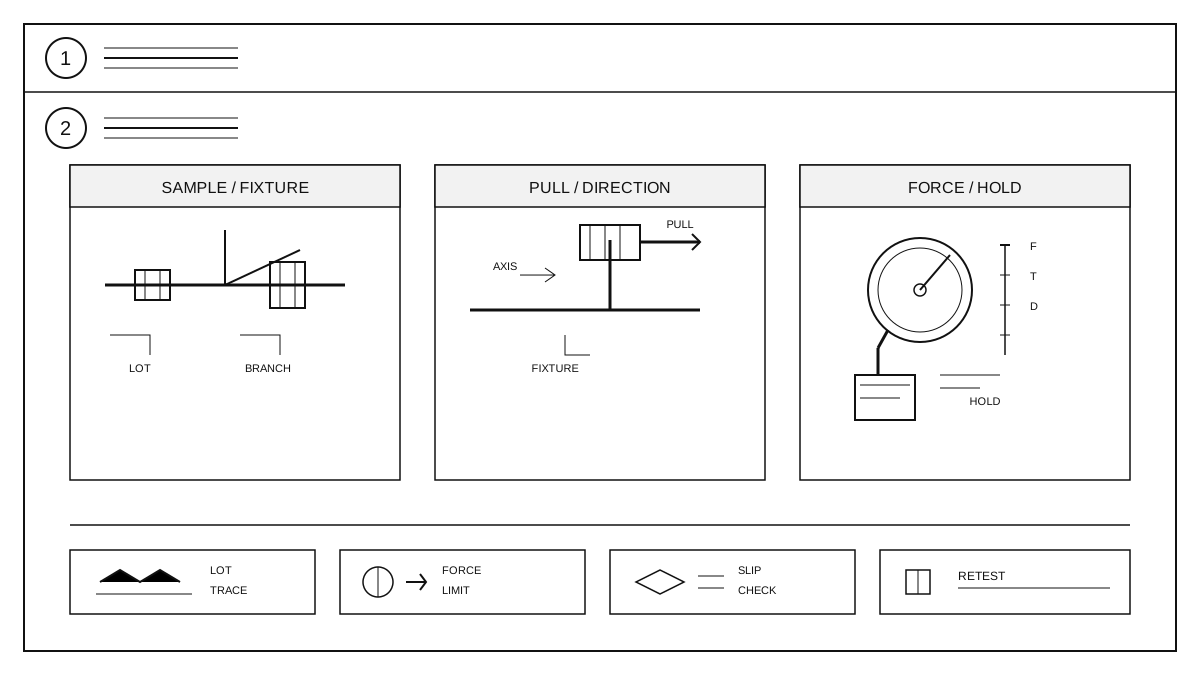
The verification object is the sheath's ability to retain at the branch root, as well as the fastening ability of clips, cable ties, and brackets for branch routing. Samples are taken from the batch of finished products, covering the main trunk, short branches, and long branches, recording the sheath model, cut length, number of fixation points, and assembly batch. Before testing, specimens are placed according to storage conditions, and temporary heating, shaping, or adding fixings is not allowed. The number of samples is determined according to the verification plan, and individual results do not represent the entire batch.
Fixture and stretching direction
The sheath pull-off test fixture grips the end of the sheath; the clamping surface should be flat, and the sheath must not be damaged or clamped on the internal wires. The pulling direction should follow the actual direction of the branch and must not be angled or twisted; when the branch is fixed for testing, fix the main trunk and apply tensile force along the branch axis. Leave sufficient distance between the fixture and the sheath to avoid the fixture edge pressing on the fixation point first. Before the test, mark reference lines on the specimen and record the clamping position and pulling direction.
Loading, Maintaining, and Measuring
Set the loading speed, holding time, and sampling frequency according to the verification plan. During the loading process, continuously record the force and displacement; do not only look at the final maximum value. After reaching the specified holding time, read the holding force and observe whether the sheath slips, whether the fixing point rotates, and whether the branches are straightened. The testing machine, force sensor, and displacement meter should be calibrated periodically, and the fixture must not loosen during the test. If abnormal sounds occur or the sheath tears, stop immediately and record it.
Determination and Failure Modes
The judgment should be carried out according to the holding force and displacement limits specified in the drawings or verification plan, and should not be replaced by feel or visual inspection. Common failures include the sleeve sliding off from the branch root, the buckle coming off, the cable tie breaking, bracket rotation, and sleeve tearing. The failure location, failure load, and displacement should be recorded for each piece, and sample photos or markings should be retained. If any one item exceeds the limit, it is judged as nonconforming; the judgment of the entire batch is carried out according to the sampling plan, and individual conforming items are not considered as the conclusion for the whole batch.
Batch Records and Reverification
Record batch, sheath model, fixture model, sample quantity, test conditions, individual results, and failure modes. After testing, check whether the fixture point has left an impression and whether the sheath has cracks, and disassemble to confirm the internal wire condition if necessary. Re-verify after changes to the sheath, fixture, cut length, or assembly sequence; previous conclusions cannot be reused. See sleeve and branch routing process for process details.