
Pitch and crosstalk verification for twisted and shielded pairs: sampling, fixture, sweep and judgment
Test boundary: what is and is not covered
This test covers pitch consistency and crosstalk behavior of twisted and shielded pairs. It does not replace vehicle or system-level electromagnetic compatibility testing. Define the frequency range, number of pairs, termination, fixture length and reference ground first; a single-pair result does not apply to another pair or a different length.
Sampling and conditioning
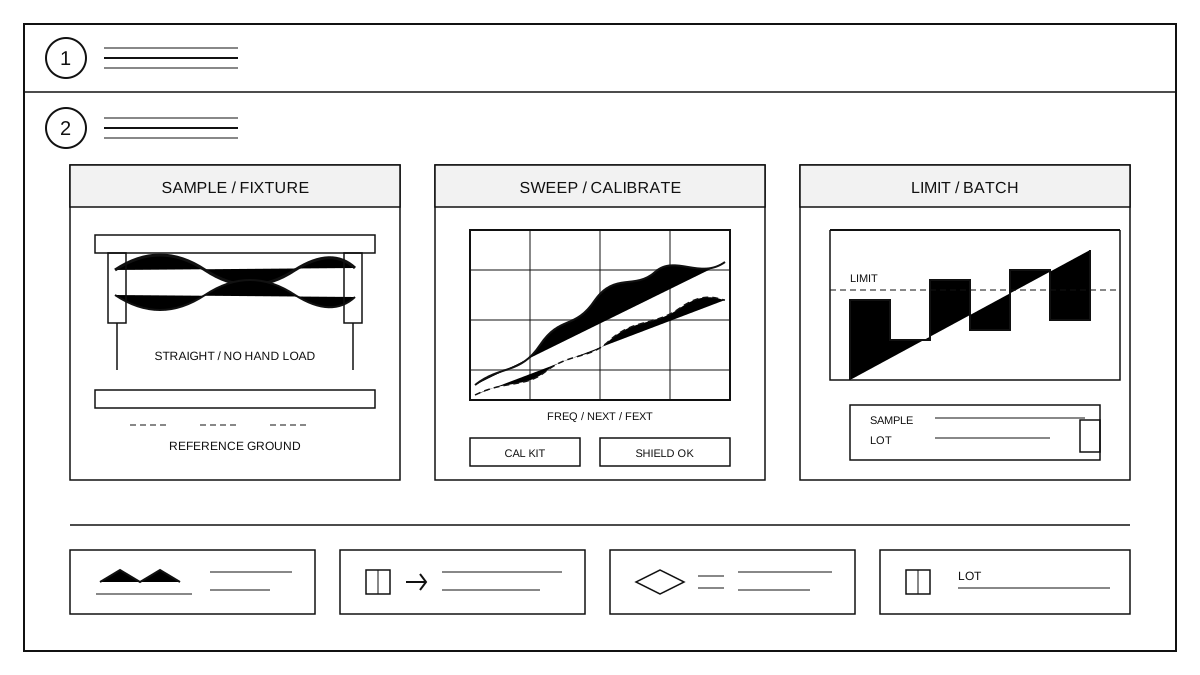
Take representative pairs from the same harness batch and record wire number, gauge, pitch setting, shield type, termination and batch. Terminate the sample in the production state; do not add or cut length by hand. Condition it at the specified temperature and humidity until stable, and avoid bending or tension that changes the pitch.
Pitch checks and fixture set-up
Measure pitch at the first, middle and last section with a pitch gauge or caliper, and record pitch and untwisted length for each section. Keep the pair straight in the fixture and ground the shield as in the production termination. Set reference ground, fixture length and pair spacing from the test document; do not press the pair by hand and change its geometry.
Crosstalk sweep and shield continuity
Set the frequency range, number of points and calibration kit from the test plan, calibrate first, then measure. Record near-end crosstalk, far-end crosstalk or insertion loss where applicable. Check shield continuity at the same time; an open, short or intermittent shield termination will contaminate the result, so fix the termination before judging the pair.
Judgment and batch handling
Judge against the limits in the drawing or test specification; do not accept a pair just because no obvious anomaly appears. Record sample number, pitch, termination, frequency points, worst crosstalk value and shield resistance. Quarantine the batch when a limit is exceeded and retest with tightened sampling. Stop the batch from release if the retest still fails. For the process requirement, see twisted and shielded pair process.